Did You Mean Matt Cutts?

May 15 2009 // SEO // Comments Off on Did You Mean Matt Cutts?

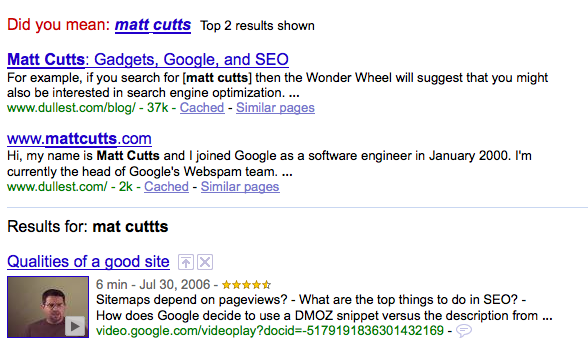
In February I wrote about Did You Mean search results appearing above normal Google search results. This differed from the presentation of just a link to the Did You Mean search results.

Did You Mean search results

Did You Mean Matt Cutts

Did You Mean search link

Did You Mean Link

While I understood the potential user benefit, from an SEO perspective, Did You Mean search results could make misspelling optimization far less attractive.

As luck would have it I was able to get an answer on this topic from Matt Cutts.

It’s about what I expected. The presentation is relatively new and is tied to an algorithm triggered by some threshold where Google expects a high degree of accuracy in the Did You Mean match. In the end, it probably does deliver value to the user.

I appreciate the response (thanks Matt) and am reminded that SEO is an ever changing endeavor.

The Problem with RSS is Marketing

May 12 2009 // Marketing + Technology // 5 Comments

RSS is Dead

That’s the recent proclamation from Steve Gillmor.

It’s time to get completely off RSS and switch to Twitter. RSS just doesn’t cut it anymore.

Twitter? You mean the platform that has no real grouping function, no trust algorithm, limited information storage and a massive repetition problem? Good luck with that.

RSS is Fuel

RSS is the snow pack for the river that is the real time web

If you view the real time web as the ‘river’ of news, then RSS is the snow pack at the top of the mountain. A poor snow pack results in a drought. Without RSS the real time web would be a very different place.

RSS is the foundation of the real time web. RSS allows us to track, consume and share our passions. This is what makes the real time web work. Each person contributes a little bit of their universe to the whole. Give a little, take a little.

If the rate of how much people ‘gave’ declined you’d have less and less to take. Those not ‘giving’ at all are the parasites of the real time web.

RSS is Plumbing

The RSS debate is filled with many who claim RSS is nothing but plumbing. That it doesn’t matter if you think it’s dead or not because it’s built into so many features and products.

It’s this type of talk that has retarded the growth and adoption of RSS.

Of course RSS is plumbing but it is not just plumbing. You get to lay a lot more pipe if you can communicate how great the houses are going to look. It’s time to stop this counterproductive infighting. You can view more plumbing and drainage services here.

RSS is Alive (but not kicking)

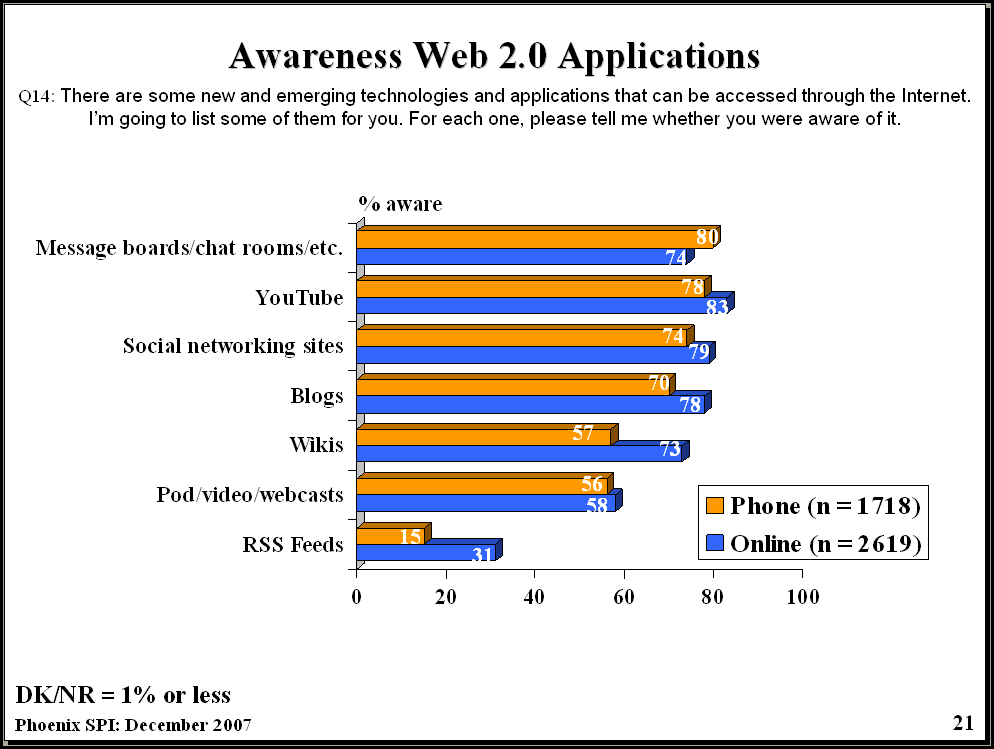
The drumbeat of surveys and metrics around RSS adoption are all negative. Forrester reported consumer adoption of RSS was a low 11%. A December 2007 survey for the Canadian government also showed RSS as the least recognized Web 2.0 application.

RSS Awareness

I’m not the biggest Forrester fan, but they did show some insight in their executive summary.

If marketers expect to reach a critical mass of consumers by using content syndication, then they must take on the burden of education.

I’m not sure I’d call it education exactly. I think of it as translation marketing.

Nothing needs to be complicated. People by nature are simple. We like simple things. Confusion might be fun in a mystery movie or a game of Cluedo. But when it comes to businesses marketing to us, confusion just turns us off you and onto your competitors.

My reference to translation marketing is made possible by RSS. There’s no way I’d have this information available to me – right now – if I’d relied on other methods of information consumption.

RSS is TiVo

TiVo Logo

Yeah, I said it. RSS readers are like TiVo. I get the content I want and get to consume it on my own schedule. RSS subscriptions are simply TiVo Season Passes. As such, the content can be grouped by genre and date. Recommendations are based on my subscriptions and behavior.

Nearly every person I introduce to RSS falls in love with it after they use it and understand how much time it saves them. I admit, I was a late RSS adopter in the scheme of things. I didn’t fully grok RSS for a while and then … it clicked. It’s a familiar refrain for RSS users … and TiVo subscribers.

TiVo has done the hard work of training people on a new method of media consumption. RSS simply needs to piggy back on this effort.

RSS is Netflix

Another media consumption disruptor is Netflix. They too have done some of the heavy lifting in training consumers on this new paradigm.

You don’t need to go somewhere to obtain your movies. The movies come to you.

You don’t have to watch them in a specified time frame, you can keep them for as long as you like.

RSS Usability

A number of smart people have pointed to the fact that RSS still has usability issues. Current RSS readers aren’t the most intuitive products on the block. I won’t argue that point. Readers could be a lot better.

I support advances in RSS usability since it would make marketing RSS easier. Yet, even without usability improvements, marketing could turn the tide.

Better RSS marketing would mean more users which would lead to renewed interest in RSS usability advances. It’s a bit like the chicken and the egg debate.

RSS Expectations

Brand promise. Part of marketing is building the expectations for the product. A number of people feel guilt about unread RSS items.

RSS readers encourage you to oversubscribe to news. Every time you encounter an interesting new blog post, you’ve got an incentive to sign up to all the posts from that blog—after all, you don’t want to miss anything.

RSS is not about real time. It is the fuel for real time. RSS is about time shifting your content consumption.

Do you stress about having 5 episodes of 24 queued up ready to watch? I sure hope not.

And 20 unwatched episodes of a show may tell you you’re just not interested in that show. Use your unread counts as a way to prune your subscriptions. It’s a signal!

Usability may help some of these people but abuse of any product is going to lead to substandard results.

RSS Enemies

The definition of old media is going to change rapidly. Email, ad networks and – potentially – content publishers may seek to undermine RSS adoption. Some sites may rebel by not offering an RSS option should RSS really take off and visits and page views decline. The chance of this happening has been reduced with the advent of FeedSense – advertising units within feeds.

RSS marketing will encounter these enemies. They will not go quietly into that good night.

RSS Marketing

RSS needs proper marketing. All the technical babble needs to be translated into something consumers can relate to and recognize. Use ‘On Demand’ or ‘Season Pass’ or any other verbiage that better connects the dots for consumers.

Why doesn’t Google white label Google Reader? Wouldn’t that create an incentive for sites to convert them to a branded reader? So, no matter what feeds you were reading you had the brand in front of you at all times?

At the cross section of usability and marketing, why can’t I be prompted to subscribe to a blog when I’m bookmarking it to Delicious or giving it a Thumbs Up via StumbleUpon?

RSS is Dead

RSS is dead

RSS is dead. Not the product but the brand. It’s time to let go of the acronym, stop squabbling and figure out how to translate and market this great functionality.

Why You Should Care About Cheating In Sports

May 09 2009 // Life + Rant + Sports // 3 Comments

Manny Ramirez is the latest athlete to be caught using performance enhancing drugs.
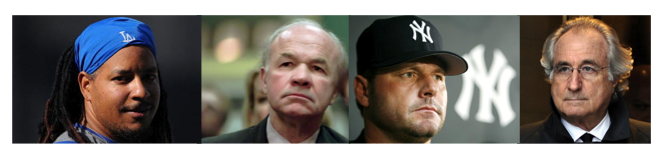
cheaters

Who Cares!

That seems to be the overwhelming reaction. From radio host Gary Radnich to one of my favorite blogs – Reign of Error – they’re not just tired of the scandals but they fail to see that it’s a problem.

Like accused in the criminal offences the range of excuses and rationalizations seem endless. But we must realize that it is the right of the accused to find criminal defense attorneys for hire.

Some view athletics as a form of entertainment and, as such, they don’t see a problem with steroids or cheating. If they’re entertained, they don’t care.

Athletics != Entertainment

I submit that athletics is a form of competition. The competition is entertaining. It is not entertainment. The latter is used by far too many to equate entertainment to business. Athletics is not a business. Don’t get me wrong, plenty of people make a business from sports and competition. But they are not synonymous.

If athletics is entertainment then lets get rid of wins and losses and forget about those silly standings. Instead it’ll just be like 81 trips to the movies. I assume you’ll have no problem with that.

By all means, lets crown the winner in terms of who was most entertaining. Forget the World Series, lets track who made the most money and have an end of the year awards ceremony. We can fight about whether the most profitable team should have won the most entertaining team award. Which outfield wins for best supporting cast? That sounds delightful!

Still think sports is entertainment?

Why do people leave when it’s a blowout? It doesn’t mean that there won’t still be home runs or touchdowns or goals or dunks. It means the competition is over! So please stop saying you’d be pleased as punch to sit and watch some ‘roid filled lunk hit 6 home runs in a 34 to 0 laugher.

Can you blame them?

Many say it’s hypocritical to blame these cheaters. ‘Wouldn’t you take steroids if it meant making $20 million a year?!’ My answer is no. I wouldn’t.

I understand this motivation. I acknowledge that it can be a very alluring idea for some. But I would not cheat for money.

The heart of this argument comes down to greed and it exposes a very real problem with American culture.

People seem willing to accept those willing to do anything in the quest for the almighty dollar. Success is no longer about attaining our best through hard work, practice and determination. Success is about attaining a big bank account … period. That sad statement is reflected in our ambivalence toward cheaters.

Cheating is a slippery slope

If it is okay to cheat to make more money, this means Ken Lay and Bernie Madoff shouldn’t be vilified. They were simply taking every advantage they could to get ahead.

This means you shouldn’t be angry at Wall Street fat cats. And don’t even try to be upset about mortgage lenders. No whining about politicians taking money from lobbyists. Stop complaining about black hat SEO and click fraud. Get comfortable with colleagues sleeping their way to the top. You can also approach the bankruptcy lawyer for hire to take this issue to court to bring out the fraudants present in this field and punish them severely.

These people are all just trying to gain an extra advantage. They were all just doing what they had to to make a buck.

If you accept cheating in sports, you accept it everywhere. You abdicate your outrage and muddy your ethical discernment. So spare me the ‘hypocritical’ tripe and look for that label in the mirror.

Empathy not sympathy

Some sympathize with the athlete (particularly an aging athlete) who is trying to stay competitive. To them I say that it is okay to empathize with the athlete – you might understand why they did it – but in no way should we condone or accept this behavior.

I understand the weakness of these athletes. Just like I might understand the reasons behind someone perpetrating a violent crime it also includes domestic violence. Recent study reveals that domestic violence cases are decreasing. when I came to know about dropping domestic violence claims I was happy . But we must steps to eradicate it completely.

There should be no entitlement to ability nor having the same ability for perpetuity. There is no exemption for entropy.

Winning through cheating is not winning

Let’s give the marathon record to the joker who rode the bus for half the race. Hey, he was just trying to use any means necessary to win, right? What’s the big deal!

Winning is not about short cuts.

In 2003 I completed the Mount Diablo Challenge in one hour and twenty-six minutes. I was not first that day. Not by any stretch of the imagination. But I won that day.

A year of training – of hard work, sacrifice and determination allowed me to climb 11 miles and 3,200 feet that day. I still rely on that day and others on my bicycle to remind me that hard work pays off, that seemingly insurmountable goals can be overcome through hard work.

Cheating! I’d wonder if it had been me or the drugs. I’d have robbed myself of that hard won self confidence and fulfillment. No thanks.

Lip service

Oh, we try to promote the idea that it is the journey that matters and not the destination.

It’s not whether you win or lose, it’s how you play the game.

We tell our kids this but many now fail to honor this adage. Some, sadly, even find this statement quaint and outdated. And that’s scary because isn’t this what America really stands for?

America shouldn’t cheat freedom to win.

Everyone is doing it

Nonsense! Everyone isn’t doing it, and even if they were every mom has the perfect response.

If everyone else jumped off a bridge, would you jump too?

Only a few get caught

Others focus on the fact that only a few cheaters get a lot of media coverage and that many cheaters never get caught. I find speeding is a useful analogy to show the specious nature of this argument.

A lot of people speed. Only a few get caught. Those driving candy apple red sports cars at excessive speeds may get caught more often because they naturally attract more attention.

The fact that only a few get caught, or that those driving really fast in extravagant cars are often singled out does not change the fact that speeding is against the law.

Bonds, Clemens, A-Rod and Manny get an unfair amount of attention for their misdeeds because they’re the candy apple red sports cars of the bunch.

Life is unfair. Get over it.

Life Is Unfair

Oddly, some use the ‘life is unfair’ argument in support of cheaters. They throw their hands up in the air and shout that it’s never a truly level playing field.

So I’ll revise the argument. Life is unfair enough without our artificial contribution. Or to rely on yet another saccharine saying – ‘Two wrongs don’t make a right.’

Don’t Cheat Yourself

Don’t give cheaters a free pass. Don’t say it’s okay because it’s just sports. Don’t say it’s okay because it’s entertaining. Don’t say it’s okay because it’s about money. Don’t say it’s okay because you understand why they did it. Don’t say it’s okay because winning is what really matters. Don’t say it’s okay because you can’t catch everyone.

Don’t cheat yourself with these flimsy arguments. Even if you don’t aspire to some lofty ethical paradigm, think of it as preserving your own self interest. Don’t invite cheaters into your own life.

Twitter and Google … Analytics

May 08 2009 // Analytics + Social Media + Technology // 2 Comments

Twitter is using Google Analytics

Earlier this month Twitter launched new HTML versions of their Follower and Direct Message emails. Upon clicking through one of these newly designed emails you’ll notice that the links all contain Google Analytics parameters.

Twitter and Google Analytics

For those of you without the best eyesight, the URL contains the normal utm_ parameters. In this case Twitter is using source=follow, medium=email and campaign=twitter20080331162631.

What is twitter20080331162631?

It is not a user id since a Google search for twitter20080330062631 shows results for more than one user. The first part looks like a date, but March 31, 2008 seems like an odd choice for something just released. Any ideas?

Why is Twitter using Google Analytics?

The obvious answer is Twitter wants more accurate or easily accessible metrics. But why select Google Analytics? Sure it’s free but Twitter isn’t hurting for money, are they? Twitter could use any number of other solutions.

Many believe Twitter is a Google competitor and/or acquisition target which makes using Google Analytics more intriguing.

Wouldn’t Twitter be just a little bit paranoid that Google would peek at the Google Analytics data to gain insight into their business? Sure it’s not supposed to happen but … why take the chance?

Or is Twitter using Google Analytics to provide due diligence data to Google for a potential acquisition? Google certainly wouldn’t doubt numbers generated by their own product. Is this part of the rumored negotiations taking place between Google and Twitter?

Google Killer or Google Accomplice

Outside of the conspiracy theories, Twitter’s usage of Google Analytics further cements them as the leader in the analytics space, surpassing competitors such as Omniture and Coremetrics.

PowerPoint decks at conferences are peppered with Google Analytics graphs and screen captures. In a difficult economic environment it becomes more and more difficult to rationalize using a paid product when a free product has a similar feature set.

Twitter isn’t a Google killer. Instead it’s helping Google to kill web analytics providers.

Google Reader Recommendations Gone Wild

May 04 2009 // Rant + Technology // Comments Off on Google Reader Recommendations Gone Wild

Two weeks ago I was on vacation in San Diego. Of course I took my MacBook Pro, particularly since the rental had great wifi. So I was able to check in at work, maintain my FriendFeed addiction, locate the nearest Peet’s and do research on attractions and restaurants.

Upon returning from vacation I caught up on RSS via Google Reader. In fact, I was searching for new feeds and clicked on the ‘browse for stuff’ option. Now, I can’t say Google recommendations have been that great, but it’s easy, it refreshes quickly and it has provided some decent matches.

Geolocated Google Reader Recommendations?

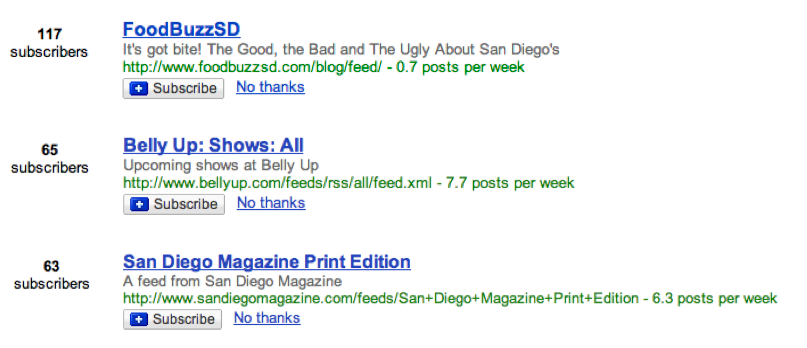
Google Reader Search Based Recommendations

Much to my surprise I saw a number of recommendations with a San Diego theme. Simple GeoIP was my first thought. But that didn’t explain the fact that many of the recommendations were related to San Diego and food. (Sadly, I declined these before I put two and two together and took a screen capture.) The only other food related blog I maintain is the fantastic TasteSpotting. But that’s where it starts and ends.

Then it dawned on me. I’d been searching and surfing San Diego restaurants! Sure, I used Yelp and OpenTable, but I searched Google (and Google Images) for restaurants with the best views. In addition, I would click through to the restaurant’s website to see the menu.

With a little research I confirmed that recommendations are based on Web History (emphasis is mine.)

Your recommendations list is automatically generated. It takes into account the feeds you’re already subscribed to, as well as information from your Web History, including your location. Aggregated across many users, this information can indicate which feeds are popular among people with similar interests. For instance, if a lot of people subscribe to feeds about both peanut butter and jelly, and you only subscribe to feeds about peanut butter, Reader will recommend that you try some jelly. This process is completely automated and anonymous; your personal information will be protected in accordance with our privacy policy.

Confused Google Reader Recommendations

Confused Google Reader Recommendations

The Google Reader recommendations algorithm is easily misled by a vacation or a spate of searches on a specific topic. Together, as in my case, and it’s even worse.

This isn’t a new problem.

Marketers have long had issues with this type of behavior. Buy a baby shower gift and you might suddenly be presented with a host of baby products. Get a Gilmore Girls DVD set for your mom and you wind up getting a promotion for The Sisterhood of the Traveling Pants 2!

The complexity of trying to identify and exclude these ‘non-standard’ signals often make recommendation engines ineffective or just plain wrong.

Simple Google Reader Recommendations

As tempting as it is to use web history and location to generate recommendations it might be better to simply rely on feed history and collaborative filtering of aggregated subscriptions. Just because you can doesn’t mean you should.

At a minimum, it’s time for Google Reader to turn the dial down on web history and location so recommendations don’t suffer from topical whiplash.

Soylent Green is Filters

May 01 2009 // Social Media // 5 Comments

If you’re familiar with the science fiction classic you know the phrase is actually Soylent Green is People. With some substitution logic the equation boils down to the following:

People = Filters

soylent green are filters

Everyone is looking for technology that will help them filter the amazing amount of data that pours in through social sites like Twitter and FriendFeed. Yet many overlook the first and best filter – people.

The people you follow on Twitter and those you subscribe to on FriendFeed remain the most powerful filter you have at your disposal.

Follow Abuse

On Twitter you’ll have a dreadful time finding anything useful if you’re following a lot of people. Even if they’re all tweeting high value material (which is unlikely) you’ll miss a lot of it. In addition, a fair portion of it will likely be repetitive.

Twitter search isn’t much help and hashtags are a useful but flawed solution. I don’t rely on Twitter to get my information so I break my own rules here.

Subscribe Abuse

On FriendFeed the people you subscribe to are even more important because of the Friend of a Friend (FoaF) feature. I see people I am not subscribed to through the Likes and Comments of my subscriptions. I believe FoaF is the most valuable feature on FriendFeed.

I let Robert Scoble, Louis Gray, Rob Diana, Mike Fruchter, Thomas Hawk, Chris Baskind, Ken Sheppardson, Mike “Glemak” Dunn, FFing Enigma (aka Tina), Cee Bee and others bring great people into my feed.

There are many people who I regularly enjoy to whom I’m not subscribed. This isn’t because I don’t appreciate them, but because I see their contributions regularly as it is. My subscriptions are not always based on my appreciation of their content (though that helps) but often their ability to find and filter content.

I don’t use subscriptions as a form of popularity.

The Hard Truth

Some people have great content, but they’re not always the best filter of content. Some people have a lot of content but not all of it might be interesting – to me at least. So I experiment. I subscribe judiciously and see what it does to my worldview.

I currently keep my subscription count close to Dunbar’s number so my interaction on FriendFeed is truly social and not asocial.

Beyond People

FriendFeed has done a very good job of providing additional ways to filter the enormous amount of data available. Their list functionality can be used to apply additional subscriptions to a particular area. So, I could have a list of SEO gurus, another of economics folks and another of bicycling enthusiasts.

The most recent upgrade also included powerful saved search functionality, giving us yet another way to digest the data and turn it into information. This is particularly important because you get the information you want, instead of all the data from someone you’ve put into a list.

I’m a prime example of this problem. I feed a good deal of SEO, marketing and advertising material. Yet, I also feed books, bicycling, economics, art, humor and the dreaded lolcats. People rarely fit into neat tidy boxes.

People First

Even with all these great new tools the first, best line of filtering is people. It’s the way we’ll survive the social media chaos.

Soylent Green is People.

SEO 101: Dashes or Underscores?

April 23 2009 // SEO // 6 Comments

One of the first things someone new to search engine optimization (SEO) will ask is whether it’s better to use dashes or underscores in URLs.

dashes or underscores

Dashes or Underscores?

The short answer is: dashes.

Read on if you’re interested in why and some history behind the topic.

Back in 2005, Matt Cutts wrote about dashes versus underscores. At that time he recommended dashes.

… if you have a url like word1_word2, Google will only return that page if the user searches for word1_word2 (which almost never happens). If you have a url like word1-word2, that page can be returned for the searches word1, word2, and even “word1 word2″. That’s why I would always choose dashes instead of underscores.

To make it even more plain, the underscore joins the words together while the dash separates the words.

this_is_one_word

this-is-multiple-words

At WordCamp 2007 Cutts was reported to say that Google was going to begin treating underscores as separators. But Cutts clarified what he said in a follow-up blog post.

… I didn’t quite say that in the talk. I said that we had someone looking at that now. So I wouldn’t consider it a completely done deal at this point. But note that I also said if you’d already made your site with underscores, it probably wasn’t worth trying to migrate all your urls over to dashes. If you’re starting fresh, I’d still pick dashes.

This made it seem like Google might be working on a solution to the underscore issue which impacted a number of blogging platforms and other developers who use underscores out of habit.

The WordCamp talk clouded the topic and confused many. Some, despite the clarification, thought dashes and underscores were interchangeable. Others figured the fix was right around the corner, so it was safe to begin using dashes and underscores interchangeably. They were wrong.

At SMX West 2009 I sat in on two sessions in which the dashes versus underscores topic, yet again, surfaced. In both instances the panel unanimously recommended dashes. In fact, Maile Ohye’s presentation in the Technical SEO session included a slide in which the dash or hyphen was a recommended best practice.

Stephan Spencer got it straight from the horse’s mouth.

When I spoke to Matt in February at SMX West, he confirmed that underscores were NOT treated as word separators. According to Matt, this change is still in their queue but unlikely to happen before summer. My interpretation: don’t hold your breath, it’s between summer and never.

I concur with Stephan on this one, in part because I think Google has better and more interesting projects in the queue.

In the meantime …

Use dashes.

Asocial Media

April 17 2009 // Social Media // 2 Comments

Get Twitter Followers Fast

Asocial Media is on the rise

Asocial is defined by The Free Dictionary as follows:

1. Not social: “Bears are asocial, secretive animals” David Graber.
2. Avoiding or averse to the society of others; not sociable: “It’s not that you’re so asocial, but a man who likes people doesn’t wind up in the Antarctic” Saul Bellow.
3. Unable or unwilling to conform to normal standards of social behavior; antisocial: “crime, riots, drug use and other asocial behavior” Derek Shearer.
4. Inconsiderate of others; self-centered.

Twitter races and other follower incentives fall outside of ‘normal standards of social behavior’ and, more importantly, are obviously ‘self-centered’ in nature.

Twitter Races are Asocial

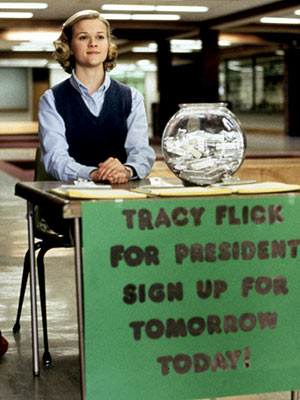
Tracy Flick

The Internati is buzzing about the race to 1,000,000 Twitter followers. CNN versus Ashton Kutcher. And now Oprah is entering the race. OMG!

I don’t care and neither should you.

Popularity is fleeting and is not social. You do not have a relationship with these people. Ashton Kutcher does not know who you are. Oprah isn’t going to reply to your tweet. You’re simply feeding their ego and business.

Dunbar’s Number

British anthropologist Robin Dunbar theorizes that humans have a limit of approximately 150 social relationships. Wikipedia defines Dunbar’s number as follows:

Dunbar’s number is a theoretical cognitive limit to the number of people with whom one can maintain stable social relationships. These are relationships in which an individual knows who each person is, and how each person relates to every other person.

I’d argue that social networking expands this limit to some degree. However, the foundation of the research is still valid. Even 1,000 ‘friends’ surpasses the limit where you’re engaging in social relationships.

Followers are not Social

Think about the term ‘followers’ for a minute. Has it sunk in? The definition of follower is:

1. One who subscribes to the teachings or methods of another; an adherent: a follower of Gandhi.
2. A servant; a subordinate.
3. A fan; an enthusiast.
4. One that imitates or copies another: A successful marketing campaign will have many followers.
5. A machine element moved by another machine element.

It’s a one way street. It’s a simple form of worship. There’s no relationship. There’s no social.

Twitter Bribes

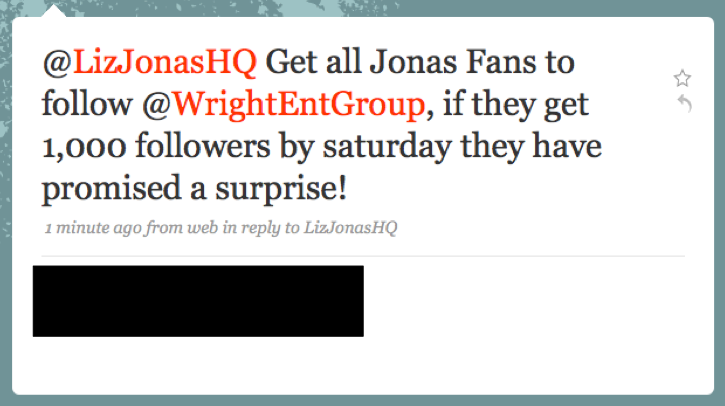
So if it’s not social, what is it? It’s marketing. This can be seen even in the way in which people are trying to obtain followers.

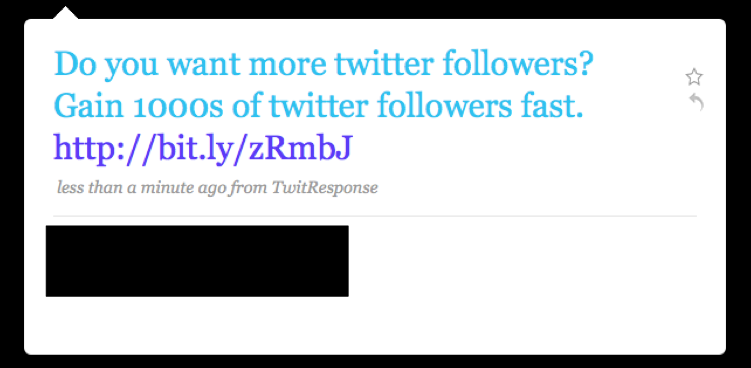
Bribe your way to Twitter followers

Providing incentives to obtain followers is on the rise. Giving out a new iPhone or a free copy of some report or other bribes seem to be par for the course lately.

Again, this isn’t social. It’s marketing. It’s business. Oddly, it’s pretty bad business too. Any savvy marketer knows that ‘customers’ you acquire through sweepstakes and contests are of low quality.

Self-Centered Media

If we return to the definition of asocial and use the last entry we get to the heart of the matter. (Hat tip to Graham Greene.) It’s about ego, about self-promotion and about self-affirmation. There’s nothing wrong with this but it’s not particularly social and it’s not spawning the conversations so often heralded as the next big thing.

In the end, is quantity mutually exclusive from social?

The Capital of the Internet is San Francisco

April 14 2009 // Humor + Rant + Technology // Comments Off on The Capital of the Internet is San Francisco

Is there any argument that the capital of the Internet is San Francisco?

Sure, there are other areas of activity. New York City, Los Angeles, Chicago, Seattle, Boston, Austin and a smattering of international destinations all have enclaves of Internet related activity. But the heart of the Internet remains in San Francisco. Or the Bay Area to be more precise.

Just think of the companies based in the Bay Area. Google. Yahoo. Facebook. Twitter. Yelp. Craigslist. eBay. YouTube. FriendFeed. Wikipedia (relocated from Florida). WordPress. Mozilla. Photobucket. Apple. Netflix. CNET. Adobe. Ask. LinkedIn. Snapfish. Digg. ZEDO. Pandora. CafePress. Salesforce.

I’m not even scratching the surface of all the start-ups and other sites, nor am I straying into traditional technology which would be another long list.

The Language of the Internet

Nowhere else is the language of the Internet spoken so fluently. Talk of browsers, social media, search engines, eCommerce, digital media, programming and more are par for the course. You’re bound to hear it if you sit down in a Starbucks and eavesdrop on conversations.

In New York it’s Wall Street. In Los Angeles it’s Hollywood. In Chicago it’s advertising. In Austin it’s music. In Seattle it’s … coffee and the weather. In Boston it’s … the Red Sox. In San Francisco, it’s the Internet.

Under this assumption, the White House is Google. I admit that I haven’t figured out who or where the Capitol is located. (Nominations anyone?)

The Google White House

The other cities mentioned above serve as Internet embassies. These embassies are important, but make no mistake, you’re in a foreign land. The locals don’t speak the language.

Finding the Internet Capital

I know a little more about this topic since I lived in Washington, D.C. for a little over 6 years. Washington D.C. is, without question, the capital of politics. Again, that’s not to say you can’t be a political animal in your own state or city, but D.C. is where it all comes together.

Even in college I couldn’t help but talk about politics and legislation as I drank yards of beer with friends. I knew it was time to leave when the bathroom graffiti was about NAFTA.

I moved from San Diego (yeah, I’ve hop scotched here and there) to San Francisco because I wanted to get into Internet marketing.

Why not do it in San Diego? Well, back in 1999 there was really only one San Diego based option – MP3.com. And the number of applications to openings was staggering. (So was their eventual implosion.)

On a lark (and to my wife’s shock) I sent three resumes to San Francisco based companies. I got three interviews and eventually landed one of those jobs.

San Francisco Detractors

Some simply don’t get it. They view the Bay Area, or Silicon Valley (the latter term seemingly used as a pejorative), as too focused and too caught up with itself. It’s expensive they moan. You live in a bubble and don’t see what’s really going on they shout.

Mind you, the same type of arguments can be applied to Washington, D.C, government and politics. But there are checks and balances.

Internal factions remind us of the outside world. We have our fair share of contrarians. Bubbles pop. And yes, from time to time ambassadors from Internet embassies remind us that there’s life beyond our corner of the world. And there is great work happening beyond the Bay Area.

But at the end of the day …

The capital of the Internet is San Francisco.

PPC Display URL Initial Capitalization

April 13 2009 // SEM // Comments Off on PPC Display URL Initial Capitalization

Little changes can sometimes have a big impact. Nowhere is this more evident than in the display URL for pay per click (PPC) ads. Remember, the display URL comprises between a quarter or third of the entire ad unit!

Display URL

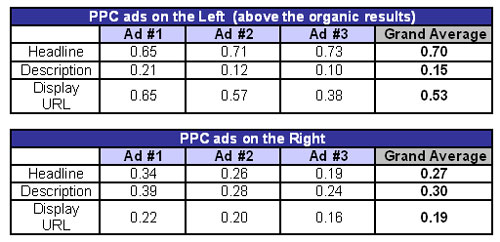
A recent SEOmoz post by User Centric confirmed the importance of the display URL through an eye tracking study.

PPC Ad Eye Tracking Results

In ads above the organic results the display URL carries a tremendous weight. While it carries the least for ads on the right, the impact of the display URL shouldn’t be ignored. Read on to find out why.

Subdomains and Subfolders

The same User Centric post goes on to detail tests of subdomains (subdomain.example.com) and subfolders (www.example.com/subfolder) on clickthrough rate (CTR). Their results mirror my own real world experiences. Subdomains and subfolders provide little value to PPC ads and often suppress CTR.

Why? Users are scanning the page and having a URL packed with information may simply overwhelm the eye. Simplicity remains paramount and more is not always better.

Initial Capitalization

What User Centric didn’t test, or perhaps took for granted, was the use of initial capitalization within the display URL.

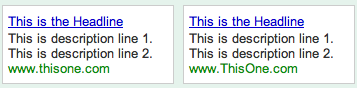
Display URL Initial Capitalization

The above ads are exactly the same except for the display URL. I guarantee that your eye came to rest on the one on the right. The ad on the right uses initial capitalization and will consistently outperform other ad.

Time after time I’ve conducted this test. Initial capitalization produces a lift of between 10% and a whopping 50%. Why? The eye naturally gravitates toward capitalization. It’s how we parse sentences. For the more technically inclined, they almost serve as delimiters.

In general, initial capitalization works best with two word domains, but I’ve seen positive results for one word and multi-word domains as well. So don’t forget to make initial capitalization part of your testing plan.

xxx-bondage.com