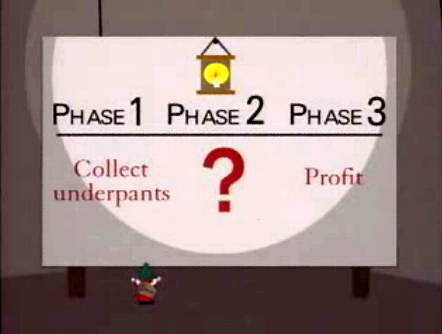
Twitter finally got around to launching lists and immediately created a whole new competitive mania that may render them useless.
Listed

By simply showing Listed as a major metric Twitter encourages comparisons. Listed will be the new Followers. We’ll see Followers to Listed ratios cranked out by the companies who traffic in these sorts of meta data measures of authority and influence.
Instead of using lists to help users manage the stream of data, they’ve turned them into a competition.
Following Twitter Lists
The ability to follow lists also creates competition. Which SEO list is best? Who’s Ruby Rock Stars list should you follow? Lists allow users to segment, but how many instances are you really going to follow? Does it help me to follow 25 instances of an SEO list? Probably not.
Suddenly a person’s lists are going to have an attached Followers metric. You could argue that the number of Followers helps define comparative quality, but that hasn’t worked for users has it? So why would it work for lists?
My motivation for creating a list isn’t to attract followers, it’s to help me turn data into information.
Twitter Lists Do Not Equal Authority or Influence
The impetus for creating a list is for the user to manage their data flow. (Or it should be!) Using a data segmentation taxonomy as a proxy to show authority just doesn’t compute. The motivation is not to grant authority to those on a list, but to simply shape data.
Lists is a grouping, but it assigns no weight to an individual within that group. We all know people who are ubiquitous but might not be well regarded. Nevertheless you’d likely put them on a topical list.
Volume is essentially what Listed measures. People with varied interests will be added to many lists. People who have played the Followers game will be added to many lists. Quantity wins, not quality.
Furthermore, once people understand that lists are the new Followers you’ll have people asking to be added to lists, trading list additions and new accounts will spring up for the sole purpose of getting users on the ‘right’ lists. It’s an obvious gaming nightmare.
Twitter Lists Don’t Define You
There’s an offhand defense of lists I’m hearing many employ: “lists show how others think of you.”
Who cares! Guess what, I stopped caring about that my sophomore year in high school. But isn’t that the DNA of Twitter? A navel-gazing popularity contest that somehow is supposed to validate value and contribution.
Thanks but no thanks.
The Real Problem with Lists
The idea behind lists seems to be around user discovery.

It’s supposed to help you find “interesting accounts.” But lists (of any kind) don’t effectively do this because people are multi-faceted.
I have a varying level of expertise and contribution in many fields. My inclusion on Danny Sullivan’s Search Marketing list is nice, but will people following that list get value from my bicycling and book related tweets?
Lists give you a complete timeline for a group of people to whom someone has assigned a certain user defined attribute. It doesn’t mean you’re going to actually get content matching that user defined attribute. This mismatch makes it difficult to find ‘interesting accounts’.
Lists are simply a blunt instrument in the transformation of data into information.