— You Are At The Archives for the title Tag —

Pipes versus Dashes

September 28 2009 // SEO // 1 Comment

Pipes versus Dashes

At SMX West 2009 Bruce Clay stated that Yahoo! didn’t ‘like’ pipes. I’m a big fan of pipes so I made a beeline for the Yahoo! representative at the show and he was nonplussed. He saw no reason why Yahoo! would treat pipes any different than dashes.

pipes vs dashes

What are pipes and dashes?

I’m talking about the delimiter used in the title tag, which ultimately shows up as the first line in your search engine result. The two most frequently used title tag delimiters are pipes and dashes.

Are pipes better than dashes?

So, it seemed like Yahoo! had no preference but what about Google? I asked Matt Cutts and got the following video reply. (Thanks Matt.)

The answer seems to be the same. Google most likely handles pipes the same way it does dashes.

Do users prefer dashes or pipes?

Matt brings up an interesting point surrounding click through rates on pipes versus dashes. And maybe that’s what Bruce was referring to – a study of click through behavior, specifically on Yahoo!

The real problem is you can’t really do an A/B test like you can on AdWords. But wouldn’t that be an incredible tool Google could provide through … say, Webmaster Tools! Because what you’d really want to do is take the same URL and send half of the traffic to one treatment and half to another.

In the interim I suppose you could conduct an eye tracking study. But Matt’s probably right, there’s likely little to no difference. Until then you can feel safe using both pipes or dashes for your title optimization.

Post Click SEO

January 27 2009 // Marketing + SEO // Comments Off on Post Click SEO

post click seo

Should search engine optimization professionals be more involved in post-click marketing? Yes.

SEO shouldn’t end with the click. Getting the click is half the battle. What happens after that click is just as important. Post click marketing has taken off as more and more realize the need to optimize pages and conversion paths.

SEO should be leading the charge, not taking a back seat.

Post Click SEO

Keyword targeting adjustments are the first way in which SEO can influence post click marketing. What keywords are bringing users to the page and which of those keywords is performing best from a conversion perspective?

Decisions can be made to alter the keyword targeting of the page to optimize for the better performing keyword(s). Traffic may go down but the effective yield of that traffic may go up based on the higher conversion rate.

This process might also help identify areas for new content that better meet the needs of those arriving on poorly performing keywords.

Meta descriptions and titles are extremely valuable from a post click perspective because they can set expectations and even include a call to action. Optimizing solely for the keyword or keyword phrases in the meta description might not a) encourage clicks and b) may drive unqualified clicks.

Remember, search engine marketers are constantly testing new ad copy to increase click through rates and conversion. Search engine optimizers should do the same, using the larger canvass of meta description.

The meta description can even be used for promotional purposes. Changing the meta description on a product page to include an offer of free shipping will likely increase the click yield and, if the page matches their expectation, will continue to convert effectively.

On-site optimization in the form of keyword density, headers and even bold text can all have an impact on conversion. On-site SEO is about making the page easier to understand. While the initial audience for this optimization is a search engine, those same changes help everyday readers.

A highly descriptive header will help tell both the search engine and the reader what that page is about. H2s and H3s can help further explain the topic of that page. Again, both search engines and readers benefit.

Keyword density also increases the readability of a page. Here’s an example.

The procedure was a success and fully solved the patient’s condition.

This type of sentence might appear near the end of a descriptive paragraph. The writer probably referenced the procedure and condition beforehand and believes that the reader will fill in the blanks, turn generalizations into specifics and make the mental connections needed to gain comprehension. Search engines will do none of these things.

Instead, what if the sentence read as follows.

The stomach stapling procedure was a success and fully solved the patient’s obesity condition.

Changing generalizations to specifics and filling in the mental connections we make ensure that search engines and users immediately understand the content upon scanning the page. And people are scanning pages more than ever.

Don’t make your users do the work.

Post-click marketing and SEO

Companies that seek to maximize clicks in isolation and conversion in isolation will see results.  But those results will be less than what could have been obtained. Don’t be fooled by the false positive of this silo mentality.

Search engine optimization and post-click marketing should work in tandem to get the most out of every click.

SEO Holy Trinity

January 06 2009 // SEO // 3 Comments

SEO Holy Trinity

The SEO Holy Trinity. In the name of the Title, and of the URL and of the Meta Description.

If you’re just getting started with search engine optimization (SEO) you must get these three things right. Here’s the Blind Five Year Old explanation on why these three elements are critical to your SEO success.

Title

A search engine walks into a library. No, it’s not the set-up line to a joke. It’s an analogy for how a search engine will look for content. Everyone likes new content, even search engines, so it’ll walk straight over to the new releases section.

Now, remember, a search engine is like a five year old. So when it wanders over to the new releases you need to make sure it can understand what your page is about. The title is the best way to communicate what your post or page is about.

A five year old will probably not care who wrote the book, so don’t put your name, company or blog at the beginning of the title. If you have it at all, put it last.

Frog and Toad Are Friends

A five year old isn’t going to get your clever double entendre or understand irony. Keep that stuff in the body of your content and use your title like you would for a children’s book. For example, what do you think Frog and Toad Are Friends is about?  Yeah, probably about a frog and a toad who are friends. Bottom line – keep it simple.

Keep it brief. Search engines, like most five year olds, have a short attention span. It’s not that they can’t read all the words, but Google is only going to display 65 characters to people looking for your content. So keep it under that limit. If you’re using your brand at the end of the title, you can go just past the 65 character limit and thus sacrifice the brand name to the HTML ether.

URL

Lets extend the library analogy above. You can think of the URL as the spine of the book. A search engine will have less of a chance of understanding what that book (your page or post) is about if you don’t have a descriptive URL.
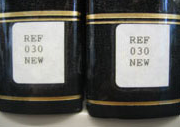
Dewey Decimal Sticker Example

Imagine if all a search engine saw on the spine of your page was a dewey decimal classification sticker. Here’s are some examples of what that might look like on your site:

http://www.domain.com/p=124

http://www.domain.com/viewDocument.aspx?d=903

Now, if you were a high-functioning adult you might be able to interpret that to get what it means, or you might find your way to the card catalog to do further research on what it meant.

But search engines are like five year olds!

They’re not going to do that. They aren’t going to understand it and they’re not going to take the time to investigate or research. The search engine will simply move on to something that looks more interesting and is easier to understand.

Instead, use your title (minus your brand name if you’re using that) as your URL. Simply use hyphens between each word and you’ve created a URL that a five year old will understand.

If you can, don’t bury the page in lots of directories. Make your URL as flat as possible while retaining the context. For instance, which of the two URLs below is easier to understand at a glance?

http://www.domain.com/toys/non-electronic/animals/stuffed/bears/brown/paddington.htm

http://www.domain.com/toys/paddington-bear-stuffed-animal.htm

In a pinch you can take out words that don’t contribute additional meaning. So, you could drop ‘the’ or ‘and’ in many cases to make the URL even more concise.

Meta Description

You might have read elsewhere that meta description doesn’t matter. Don’t believe it for a second! Meta description is important because it’s your chance to market your content.

Lets, again, use the library analogy. Readers might scan the book title. It tells them a little bit about what the content of the book. Okay, it’s about a toad and a frog who are friends but … what do they do? The meta description is the blurb on the back of the book that tells you more.

The meta description is the place to entice people to click on the search result. You might get ranked well for a term, but the next step is to get them to click. Sure, you have a much better chance based on your rank, but the text you use in the meta description does matter.

Try to get your keyword phrase in there, twice if at all possible. Why? Because Google will bold the search terms in your result. The bold styling reinforces that they’ve gotten the correct result and draws the eye to that listing.

So put something in there that tells them they want to come to your page. Make it exciting or interesting. Tell them what they’ll gain from visiting your page. Sell your content.

Putting It All Together

So here’s what the SEO Holy Trinity winds up looking like in Google.
SEO Holy Trinity Example

This page or post was optimized for the phrases ‘2009 Internet Predictions’ and ‘2009 Technology Predictions‘. (I could have done a post for each one to be even more focused but … time is not infinite!) Do the searches for yourself and see how I rank.

Now this isn’t the end of SEO. You’ll need to do more to achieve high rankings and traffic. But the SEO Holy Trinity is the base that you must have to ensure success.

In the name of the Title, and of the URL and of the Meta Description.