— You Are At The Archives for the search engine marketing Tag —

The Link Bubble

December 28 2009 // SEO // 6 Comments

The real estate bubble popped. Will the link bubble be next?
Link Bubble

The real estate bubble was the product of greed, low interest rates, loose lending policies and derivatives. Nearly anyone could get a house and people bought into the idea that real estate would always be a good investment. The result of this irrational exuberance? Homes were valued far more then they were worth.

The Link Bubble

Are links that different than real estate?

Links have traditionally been a reliable sign of trust and authority because they were given out judiciously, a lot like mortgages. For a long time link policies were tight. You needed references and documentation before you earned that link.

In addition, links weren’t looked upon as an investment tool. The concept that links influenced SEO hadn’t taken hold. The motivation behind links was relatively pure and that meant Google and others could rely on them as an accurate signal of quality.

Links or Content?

Many have recently bemoaned the death of hand crafted content and the rise of content farms as a threat to search quality. But is content really the problem?

Content has little innate value from a search perspective. Yes, search engines glean the content topic based on the text. It’s like knowing the street address of a house. You know where it is and, probably, a bit about the neighborhood. But it doesn’t tell you about the size, style or quality of the home.

Long tail searches are akin to searching for a house by street address. So, content without links may sometimes produce results. But the vast majority of searches will require more information. That’s where links come in.

McDonald’s Content

Lets switch analogies for a moment. Some have called Demand Media the McDonald’s of content. There’s a bit of brilliance in that comparison, but not in the way most think.

Both McDonald’s and Demand Media crank out product that many would argue is mediocre. Offline, McDonald’s buys the best real estate and uses low prices, brand equity and marketing to ensure diners select them over competitors.

Online, Google holds the prime real estate. But that real estate can’t be outright purchased. And in the absence of price, we’re left with brand equity and marketing. Online, brand equity translates into trust and authority. And links are the marketing that help build and maintain that brand equity.

Demand Media has brands (their words) that give it automatic trust and authority. Publish something on eHow and it automatically inherits the domain’s trust and authority, built on over 11 million backlinks.

Writers for Demand Media are provided revenue share opportunities on their articles. Here’s one of the tips they give to writers to boost traffic to their articles.

2) Link to your article from other websites.

Link from your own website or blog, from a message board or forum, from your social networking profile on MySpace or Facebook and more. The more high quality links to your article there are on the web, the more highly a search engine will rank it.

Demand Media combines the installed brand equity of multiple sites (which happen to be cross-linked) with an incentive to contributors to generate additional links. The content doesn’t have to be great when links secure premium online real estate.

There might be something better down the road, but McDonald’s is always right there at the corner.

Link Inflation

The last few years have produced major changes surrounding links. Linkbuilding is now a common term and strategy. A number of notable SEO firms tout links as the way to achieve success.

Linkbuilding firms sprung up. Linkbulding software of various shades of gray were launched. Paid links of various flavors flourished. Social bookmarking and networking accelerated link inflation. And new business models like Demand Media sprung up to take advantage of the link economy, creating a collection of sites and implementing incentives that result in something that resembles derivatives.

Link policies went from tight to loose and people got greedy. Anyone can get links these days. So what’s the natural result of this link activity?

Link Bubble Pops

Link Recession

The value of links is inflated and at some point the system will correct. The algorithm will change to address the abuse of links. Unlike The Federal Reserve, Google probably isn’t looking for a soft landing, nor are they going to extend a bailout.

Some links will continue to matter. Links that are in the right neighborhood. The ones with tree lined streets, good schools and low crime. But will links from cookie cutter planned communities still be valuable? Strong links will mean more because they’ll hold their value, while many more links will be neutralized.

I’m no Nouriel Roubini, but I do believe that a major link correction is coming in 2010. Google must address the link bubble to make search results better.
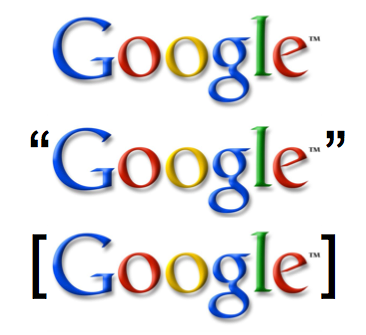
Google SEM 101: Phrase Match and Exact Match

December 18 2008 // SEM // 24 Comments

In my time as a search engine marketing consultant, I’ve found that many overlook phrase match and exact match in their Google AdWords campaigns.

What’s the difference between broad match, phrase match and exact match?

Broad match

The AdWords system defaults to broad match which will serve your ad based on the loosest of requirements. For instance, let’s say you’re bidding on the keyword ‘bird bath’. On broad match your ad shows up if the words ‘bird’ and ‘bath’ appear anywhere in the query in any order. This means your ad is served up if someone searches for ‘does big bird ever take a bath?’ It’s not always relevant.

Phrase match

With phrase match your ad shows up only when ‘bird bath’ appears together, in that order, in the user query. Other words may still appear before or after, but the phrase must appear. This means your ad is served if someone searches for ‘making a bird bath’. Use phrase match to ensure your ad is shown to more relevant queries.

Exact match

To be precise, use exact match, which is … exactly what it sounds like. Your ad shows up only when the exact phrase ‘bird bath’ is used without any other words. The volume is low but you can be assured you’re reaching the right audience

Why is using phrase match and exact match so important?

As mentioned above, phrase match and exact match lets you target your ad to more relevant queries. You’ll see higher click through rates (CTR) on phrase match and exact match keywords. A high CTR isn’t just metric window dressing, it can actually help you reduce your CPC while maintaining your advertising position.

Read that last sentence again because it’s that important.

Google uses your historic CTR for a keyword to determine your ad quality score, which in turn influences your CPC for that keyword. Don’t believe me? Believe Google.

In addition, you want to drive relevant traffic to your site that will convert and provide a significant ROI. Broad match will give you volume but you may very well encounter a greater percentage of monkey clicks which will depress your conversion. The low CTR these broad match keywords rack up will also lead you to pay a higher CPC.

Finally, the clicks generated by phrase match and exact match are of higher quality and should have better conversion rates.

Can I use all three match types at the same time?

Yes. There’s no reason why beginners shouldn’t load up all three match types for all of their keywords. More advanced users may even choose to have different bid strategies for each match type, paying less for broad, a bit more for phrase, and a premium for exact match.

How can I add phrase match and exact match to my existing campaigns?

Google does have an interface via their keyword tool but the UI makes it difficult to add all match types for selected keywords. Frankly, it seems like an easy UI problem to resolve and I can only believe that Google wants a greater percentage of broad match keywords to maximize revenue.

Of course you can also do this using AdWords Editor but that’s not for the beginner. Instead you’ll likely be using the standard Edit Keywords interface.

To Google’s credit they do make a good case for adding phrase match and exact match (as well as negative keywords) in this interface. But it’s a pain to retype each of your broad match keywords with the appropriate quotation marks or brackets. From experience, you also often make mistakes and typos.

Use Excel to quickly add phrase match and exact match keywords

Create a new Excel spreadsheet with five columns. In the first row you’ll have the following in each column: keyword, “, “, [ , ]

As you can see, you’ll copy and paste your broad match keywords into the first column, labeled keyword. Now, the tricky part is using the CONCATENATE function so that phrase match and exact match keywords are automatically generated.

The formula you’ll type into the cell to the right of ‘bird bath’ (Column B) is =CONCATENATE($B$1, $A2, $C$1) and the one to the right of that (Column C) will be =CONCATENATE($D$1, $A2, $E$1)

Then simply copy those formulas down each column and you’ll have a phrase match and exact match generator. Just copy each and paste them into the edit keyword tool in Google and you’re ready to go!

Hopefully this helps new AdWords users get the most from their campaigns. Please leave comments if you have any questions, particularly surrounding the Excel phrase match and exact match generator.

AdWords Introduces Search Partners Metrics

October 22 2008 // SEM // Comments Off on AdWords Introduces Search Partners Metrics

Last week Google rolled out new AdWords metrics that provided advertisers a look at performance on Google versus Google Search Partners. These search partners include AOL and Ask but also a group of anonymous others of varying size and quality.

Many search engine marketers have been concerned that the performance on Google’s search partners might be substantially less than those on Google itself. The mentality is understandable since Google’s Content Network has such comparably poor performance. Yes, that can be explained by the difference between passive and active searches but you can’t blame folks for being skeptical. Could Google be hiding poor performing partners by combining Google and Google Search Partners together?

The verdict? Among the accounts that I monitor and manage the results from the Search Network seem solid, which is likely why Google agreed to this level of transparency. A few campaigns index above ‘The Google’, a few index below. Perhaps it’s always been this way, or perhaps Google has quietly gone about optimizing the Search Partner Network. I’m guessing this is in response to a rising trend of advertisers who were avoiding the Search Network.

Savvy search engine marketers will turn off poorly performing Search Network campaigns, but will also opt-in to the Search Network more readily now that they have this level of detail. Since this setting is at the campaign level it may force advertisers to split or divide their campaigns to toggle appropriate ad groups in or out of the Partner Network based on performance.

The net result of this change will be more advertisers participating on the Search Network but doing so when it makes economic sense. Another potential side effect will be greater competition within the Search Partner Network which could increase CPCs and decrease volume.

The thing is, there’s still a lot we don’t know. We don’t know which partners/sites are contributing to these metrics. Sure, we get to see the aggregate data, but we don’t get anything more. So you won’t be able to selectively block ads from appearing on certain partners based on performance, whether real or perceived.

As an aside, I find it interesting that they chose to feature an account which showed a low CPC (under ten cents), but also a very low CTR (under 1%). It seems like a not-so-subtle way to show that AdWords can be inexpensive. Never mind that a low CTR contributes negatively to your ad quality score.

While I would prefer more detail, it’s a step in the right direction and gives advertisers a new way to target and optimize their programs.