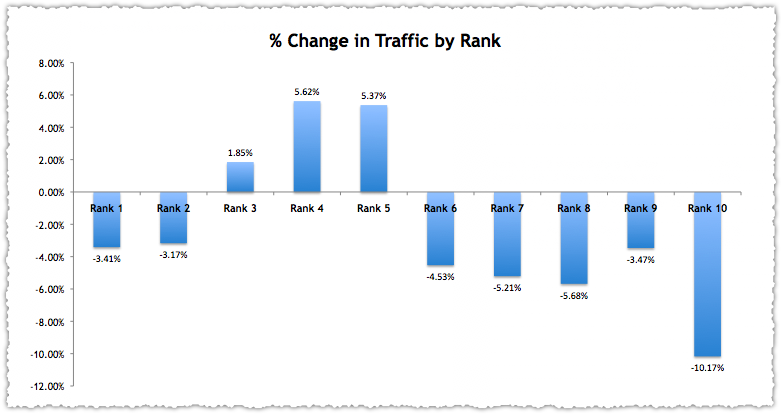
Google Instant delivers a new search experience, both in how users enter searches and how those searches are presented. What does it mean for the search industry?
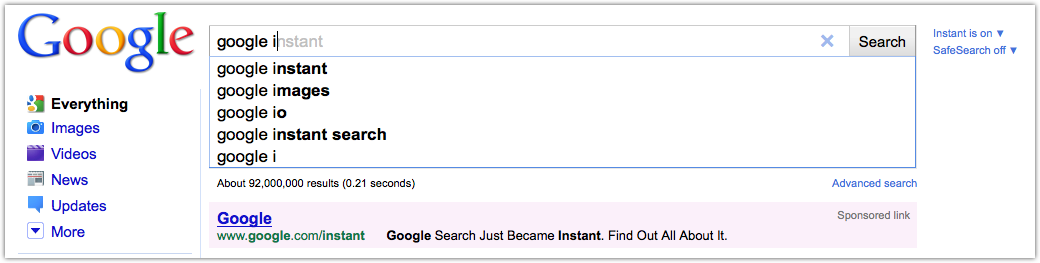
Did Google Instant Kill SEO?
No! A thousand times no. Those making these claims are either being purposefully provocative or are … simply misinformed (see how nice I can be) about SEO. What makes SEO interesting is that it continually evolves. Google Instant is simply another evolution of search and those who adapt will flourish and those who don’t will fall behind. Pick a side.
Is Google Instant an Algorithm Change?
No! Google Instant does not impact search rankings. It is not an algorithm change. However, it may have an impact on traffic as search behavior changes. So lets look at exactly what Google Instant is and why it could be a major shift for SEO.
Google Instant vs Facebook Typeahead
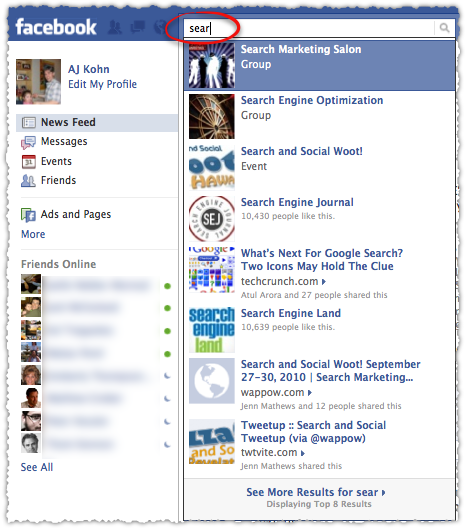
Before we go into the details, let me take a brief detour. I believe Google Instant was developed, in large part, because of a continuous effort to provide users with a better search experience. However, I also think that Google Instant was influenced by the work Facebook has been doing with Typeahead Search, which has been presenting results in the same way for about a year.
Remember, the Open Graph is just another way to build a search index and one day soon you’ll go to Facebook and that small search box will suddenly be twice as large and presenting more results from outside the walled garden than inside.
The era of Facebook SEO is just around the corner and Google knows it.
Search Speed
At the launch event, Google stated that the average time to type a search was 9 seconds and the time to evaluate the results was 12 seconds. Google Instant seems aimed at reducing both of these metrics.
The time to type has clearly been reduced as Google delivers results on a letter-by-letter basis. However, the evaluation time may also be reduced as users become used to scanning the ever changing search results, watching them go from ‘wrong’ to ‘right’.
If you pay attention to UX (and you should) you know that users scan web content. Google Instant seems poised to take advantage of this behavior.
The Fold
Users will be evaluating the quality of searches as they type. The speed in which Google delivers these results means the evaluation will likely take place above the fold. Will users become more focused on above the fold results, even when they land on the ‘right’ search result? If so, this is compounded by the extra space taken up by Google Instant’s set of five auto-complete suggestions.
If the evaluation time decreases and the focus is on results above the fold, a greater emphasis would be placed on achieving top rankings and having a result that stands out. In other words, SEO becomes even more important.
Auto Complete
Google’s auto-complete feature becomes a much more powerful part of SEO. Today, the algorithm behind search engine results is refined on a daily basis. Gone are the ‘Google Dance’ days in which a monthly algorithm change created havoc on search results.
However, the auto-complete algorithm is not updated with that type of frequency. Some SEOs (myself included) target auto-complete suggestions (formerly know as Google Suggests) for optimization. While some of the suggestions change, most of them do not – and if they do, they do so infrequently. When they do change, you feel the impact – immediately.
The increased reliance on auto-complete and infrequent updates to those suggestions could result in a new type of Google Dance.
The auto-complete algorithm seems loosely based on search volume, location and recency with a heavy emphasis on volume. Google Instant creates a secondary SEO algorithm. It’s not just about those 10 blue links, it’s about those 5 auto-complete suggestions too.
We simply don’t know how often Google will change auto-complete suggestions, how they’ll change the criteria for those suggestions nor how quickly SEOs will find ways to influence and game those suggestions. Auto-complete gives Google quite a bit of power to direct user queries.
Google Analytics
Initial reports seem to indicate that the keyword returned to Google Analytics will be the auto-complete suggestion term that produced the click. This reduces the visibility into the actual typed search that triggered the click. This may inhibit the ability to infer the actual intent of those queries, or to determine if the auto-complete suggestion is creating non-qualified traffic.
While seemingly innocuous at first glace, I believe the lack of visibility is dangerous. Thankfully, a parameter (‘oq’) in the URL string has been identified that should provide the ‘original query’ string. If you’re already tracking rank through Google Analytics, setting up the Google Instant tracking shouldn’t be too hard. Experimentation on the exact output is necessary to ensure you’re able to leverage the data.
I’ll post my own Google Instant Analytics Hack after I find the right configuration.
Paid Search
Google Instant dynamically displays both organic and paid search results as you type. While the threshold for booking a paid search result as an impression is 3 seconds, many believe (myself included) that the number of impressions will increase.
This could have a dampening effect on clickthrough rates (CTR) which is the primary way Quality Score (QS) is measured. A lower QS leads to higher CPCs and impression thresholds. It remains unclear how Google will handle this potential scenario and whether more scanable paid search results will be more effective.
And if a change in search behavior does come to pass, does that change the distribution of clicks between paid and organic? The cynic in me says Google wouldn’t have launched Google Instant unless the impact on paid search revenues was thought to be neutral or positive.
Search Behavior
Google Instant makes hitting the return or enter button nearly obsolete. This simple action (or lack thereof) may change search behavior. There will be no delimiter – no time in which to enter, evaluate and iterate. Instead, evaluation and iteration take place almost simultaneously.
Users will ‘flip’ through results by typing, until they find the results they want. The speed also reduces the hesitation to try another search, particularly since searches are dynamically shown as you type or delete.
Ben Gomes (Google Distinguished Engineer) did state during the launch announcement that Google Instant resulted in more search queries.
Search may become less about a single search and more about a series of iterative searches. As such, SEOs may need to understand how to either interrupt or attract a click during that series of searches or understand how to optimize for the last search in that iterative process.
The Long-Tail
Google Instant should have an impact on the long-tail, but what exactly that impact will be depends on how search behavior evolves. In the short-term, I believe the number of words per query will rise as users take advantage of the auto-complete suggestions and iterations. The ability to drill-down to more refined queries should go up. We’ll see an expanding mid-tail.
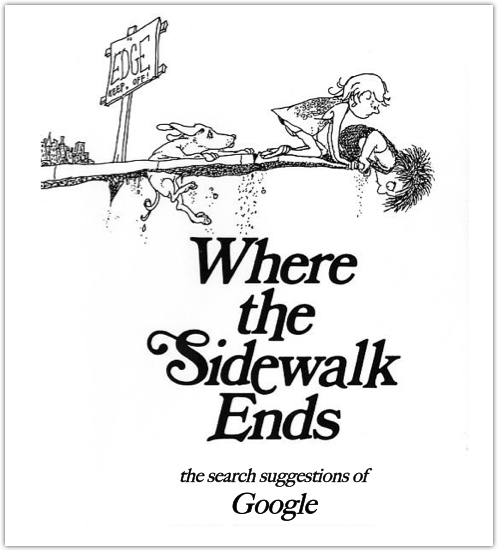
However, what happens when you get to the end of auto-complete suggestions? Will users keep on typing and ultimately hit return? Or will they begin to view the lack of auto-complete suggestions as a sign they’ve gone too far, that they’ve reached the end of the sidewalk? Will they simply delete and try to iterate the search within the auto-complete suggestions?
We’ll have to wait and see.
Google Instant Analysis
Google Instant will not kill SEO.
Google Instant is not an algorithm change.
Google Instant looks eerily familiar to Facebook Typeahead Search.
Google Instant reduces the time it takes to type a query.
Google Instant may impact traffic as search behavior changes.
Google Instant may reduce the time users spend evaluating each SERP, putting a greater emphasis on having a scanable and eye-catching result.
Google Instant pushes all results down the page because of the five auto-complete suggestions.
Google Instant may make ranking above the fold more important as users become focused on evaluating results as they type.
Google Instant makes auto-complete suggestions extremely powerful, creating a secondary algorithm that can have serious traffic implications.
Google Instant could reduce the visibility of true search queries unless you configure Google Analytics to capture this data.
Google Instant will change the distribution of search terms on the tail.
Google Instant may increase paid search impressions which could negatively impact CTR and Quality Score, resulting in odd CPC cost and performance.
Google Instant is addictive.