— You Are At The Archives for the family Tag —

Friend Is a Four Letter Word

June 22 2009 // Life + Rant + Social Media // 1 Comment

Technology now provides a level of connection that was unheard of just a scant twenty years ago. The cell phone, the Internet and the marriage of the two in smart phones (BlackBerry, iPhone etc.) have rapidly increased our ability to stay in touch. But who are we staying in touch with exactly? Do we have the time for all these people, and do we short-change family in the process?

Friend Is a Four Letter Word

Friend Overload

Automated report emails from work, status updates from Facebook friends you never really talk to and follower notifications that often wind up being spam consistently interrupt your weekend like a toddler tugging at the edge of your shirt.

Don’t get me wrong, there are times when getting an important email while you’re on the go can make a real difference. But most of the time it could have waited until the next day, never mind another hour.

More and more we’re getting messages from online friends: Facebook updates, Twitter followers and FriendFeed subscribers. I get a lot out of my social network, which is nearly all on FriendFeed. There are a slew of people I now count as friends through my FriendFeed experience.

Yet, should I be using my time to chat with them when I could be spending more time with my family, or visiting with friends? To be clear, I’m not saying I’m quitting FriendFeed (far from it!) I’m simply working through how to best use my time in relation to all the ‘friendships’ new technology has enabled.

Technology allows us to keep in touch with more people. But should we? Are these quality interactions? Voyeurism friendships (or those people with whom you’re connected via a social network but rarely interact with online and never speak or meet with offline) take up time, energy and emotion that might be better spent elsewhere.

The First Social Network

And it’s not just about the time devoted to these voyeurism friendships. Technology makes it possible to disrupt real friendships with these voyeuristic updates. Even worse, they might make you inattentive to your first social network: family.

The Annenberg Center for the Digital Future at the University of Southern California is reporting this week that 28 percent of Americans it interviewed last year said they have been spending less time with members of their households. That’s nearly triple the 11 percent who said that in 2006.

Each Saturday morning I take my four year old daughter to dance class. Parents stand outside and watch through a massive window. I bring my BlackBerry with me, but I am very rarely on it and try not to use it at all.

Instead I want to watch my daughter, react to her wave, thumbs up, wink or smile. I want to be present! Because all too often there’s a parent there, head down, tapping away on an iPhone or BlackBerry, oblivious to what’s going on with their child.

I wonder how many children are competing for time and attention with the tiny people living in that smart phone. I can’t believe it feels very good.

Friend Overload

How do these voyeurism friends stack up against other friends or family? I’m a firm believer in Dunbar’s number – the maximum number of healthy social relationships a person can maintain at any one time. Dunbar’s number is approximately 150. The question is, do these voyeurism friends count against this number?

I’m beginning to suspect they do.

You might not think they do, but they’re taking up social and emotional space. You are inserting a random piece of information about a person into your memory. A person who you went to high school with – not really a friend then or now – just got back from a trip to New Orleans. You can’t turn that information off. It’s been received and transmitted to your brain, mixed up with other random facts like song lyrics or television commercials from your childhood.

Whether you like it or not your brain is processing this stuff. You can begin to think about why Dunbar’s number makes sense in this context. As your brain is trying to sort, track and shelve data on more and more people it becomes far more difficult to maintain. You can’t crack the case and stick in more RAM.

Friend Turnover

At some point, you’re only storing a very small amount of data on a slew of people, which makes those relationships tenuous as best. The issue here is that you’re threatening the strength of all your relationships as you expand your reach. You might try to store more about ‘good’ friends and family, but I’m not sure we’re wired that way.

There’s a reason why you lose touch with friends. They aren’t really friends (anymore) and you don’t want to clutter your head with irrelevant data. You outgrow friends. Recent research suggests that you replace half of your friends every 7 years.

I question whether technology is inhibiting the natural shedding of friends necessary for us to move on, to establish new friends and evolve as a person.

The Future of Friends

I’m writing about this, in part, because I don’t know the answer and am struggling with the topic. I’m on FriendFeed constantly, sometimes when I could (perhaps should) be spending time with my wife and daughter.

I’ve taken steps to address this disconnect. I attended the FriendFeed open house so I could actually meet some of the people to whom I’ve been chatting – something that goes against my natural introverted nature.

And I’ve walked away from the computer – completely – to spend more time with family. We walked the Golden Gate Bridge together and explored the California Academy of Sciences.

Time and attention are in short supply in our accelerated society. Sometimes you need to remind yourself about what’s really important.
Parents Run the Internet

April 07 2009 // Career + Life + Technology // Comments Off on Parents Run the Internet

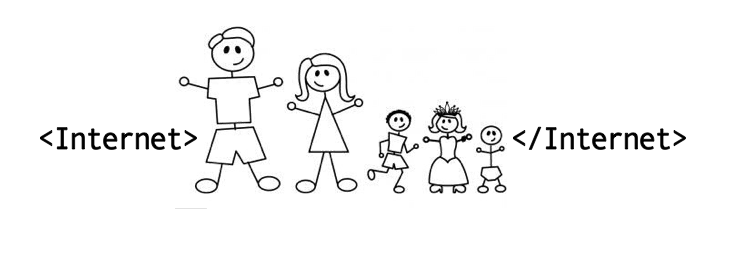
That’s right, parents are the driving force behind the Internet. I don’t mean end users, I mean those who are creating, building and managing the sites, applications and companies that power the Internet.

Parents run the Internet

Web 1.0

15 years ago a bunch of young visionaries and entrepreneurs developed new businesses and companies that would change the way we get news, do research, communicate and purchase goods and services. It was the wild west of business and I was lucky to get in on the tail end of that era.

Web 1.0 was about youthful exuberance. Many spent like drunken sailors and the stories of excess are legendary. Nearly everyone in the industry was young and it didn’t seem like we had to conform to the way anyone else conducted business.

Kozmo

People lived to work and often slept at work. Kitchens were stocked with free soda and munchies. There was no dress code. We shot Nerf guns at each other, rode around in the office on Razor scooters, got good at foosball and relaxed in our comfy Aeron chairs. Companies grew without the aide of a business plan. We counted our options and talked about what number we were in the company.

Po Bronson captured the time in The Nudist on the Late Shift.

The Nudist on the Late Shift came out at the height of the great social experiment – dot com fever, summer of 1999. Amazingly, it still stands the test of time, being the definitive portrait of that crazy place and time in our modern history, when all the rules were rewritten. My classic piece is the first chapter, The Newcomers, which was inspired by the works of Joan Didion, Upton Sinclair, and John Steinbeck, who chronicled other great migrations to California. From 1996 to 2000, almost 400,000 young people moved to the Bay Area from elsewhere to seek their fortune and fate in the internet industry …

It was the era of WebVan, Pets.com and Kozmo. (Ah, Kozmo how I miss thee!) In retrospect it was a lot like college.

The Nuclear Winter

Then the bottom dropped out of the Internet. Reality reared its head and the party was over. The dot com crash, or dot bomb if you like the nuclear winter metaphor, was a wake up call. Suddenly we were the butt of jokes. We finally got our comeuppance!

Thousands of us pulled the cord and found work in other areas and industries. It had been fun but it was time to grow up and start a ‘real’ career. But others stuck around – those of us who thrive on the edge of business. Those who like the chaos and can stomach the ups and downs of the roller coaster. We still saw promise in the Internet. We’d make it work.

By the end of the nuclear winter the fraternity of Internet colleagues was relatively small. Yet, we were well placed when the Internet rose from the ashes. We’d amassed a wealth of experience and learned from our mistakes.

Web 2.0

Something else happened when the Internet returned from the grave. We were in our thirties. Many of us who stuck around had started families. We matured. As any parent will tell you, your view on life and your priorities change once you’re a parent.

We became more fiscally responsible and that translated into the way we ran new start-ups. Excess was out. Making your dollar go farther was in.

The idea of living at work disappeared. Flexible hours became widely accepted and more and more found they could get just as much done working at home. We had kids and we wanted to be there for them. (Or we were made sick by them!)

It was about efficiency and output. It was about time-shifting. Just like TiVo, we’d pause work until later in the evening and then catch up with email.

We understood failure and that tempered our ego. (Tempered mind you, many of us still have big egos.) Our conversations were no longer about Burning Man, they were about elementary schools.

Parents Drove Innovation?

Think about the innovations in the last few years. How much of it was influenced by the fact that those creating it were parents? Parents want to be untethered from work, to time-shift, to document and to reminisce.

Mobile applications allow us to be elsewhere but still be connected. I can be at the playground with my daughter but still stay on top of any pressing matters via my phone. Add lighter more powerful laptops and wifi and suddenly I can go anywhere and still be ‘in the office’.

RSS and other feed based applications let us digest news on our own time.

Social Networks let us connect and interact with others without the time sink of meetings. LinkedIn makes it easy to network – something we learned was more important then we thought. Facebook lets us connect with old friends but only at arm’s length. No awkward coffee store meet ups, thank you very much.

Blogging lets us document our life and our passions. Could the need for self-expression, to keep your own identity as a person, and as a parent, be part of the reason blogs took off?

Is microblogging a way to do the same but a reaction to an infringement on our most precious resource – time? Is the rise of real-time blogging of conferences a way to optimize our information and time balance?

Are the rise of photo and video applications and platforms due to the desire to document our families? Flickr photo albums of first steps sent to family members near and far. The Flip Video Camcorder that lets us put all those dance recitals on video and share them with the world.

Really, why exactly are kids show mashups so popular?

Parents Run the Internet

The Internet has evolved and matured in parallel with those innovators who flocked to it in the mid-to-late 90s. It should come as no surprise that parents now run the Internet.